
Study Insights

D&C 95 (June 1833)
A Call to Build and Believe
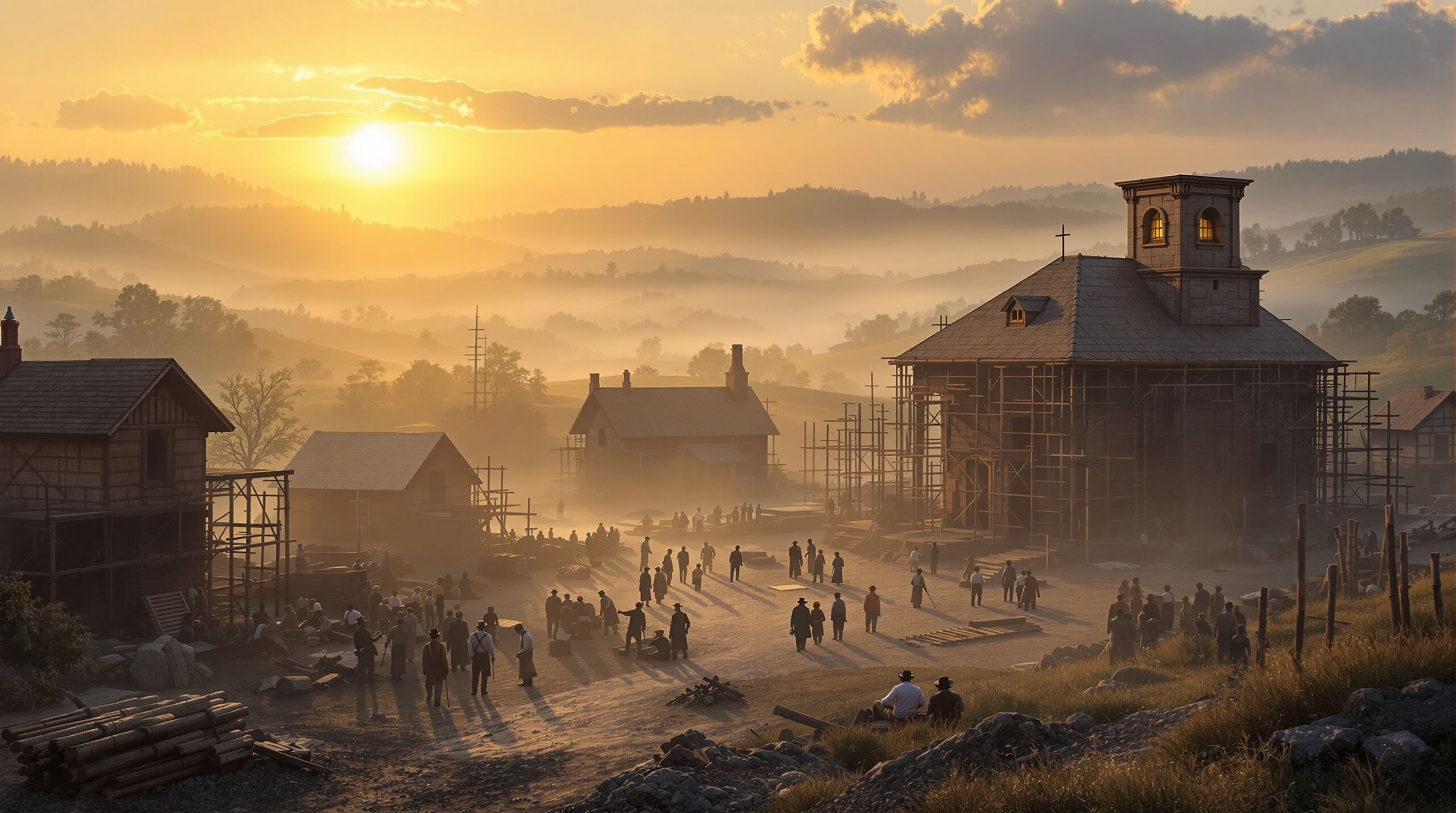
Doctrine and Covenants 95, received in June 1833, stands as a powerful revelation in early Church history that intertwines rebuke, revelation, and renewal. At its heart, it is both a chastening and an invitation—a divine reminder to the Saints in Kirtland, Ohio, that their spiritual and temporal progress depended on obedience and faith. The commandment to build the Kirtland Temple wasn’t merely about erecting a physical structure—it symbolized a collective effort to create a house where heaven and earth could meet, where divine instruction would descend, and where the Saints could be endowed with spiritual power.
By mid-1833, the Saints had grown rapidly in number and responsibility. The School of the Prophets had begun, the printing of sacred texts was underway, and the community was learning how to live in consecration. Yet amidst their busy spiritual labors, the command to build a “house of the Lord” had not been acted upon. The Lord’s message in D&C 95 came as both correction and compassion—a wake-up call to the Saints that preparation for divine blessings could not wait.
The Setting and Spirit of Kirtland
The revelation came during one of the most transformative periods of the early Restoration. Kirtland was the spiritual hub of the Church in 1833. It was a place of both revelation and refinement—where visions, heavenly visitations, and instructions on the higher law poured forth. But it was also a place of hardship. Many of the Saints were poor, and the idea of constructing a temple seemed daunting.
Still, the Lord’s voice through the Prophet Joseph Smith carried a tone of urgency and purpose. “Whom I love I also chasten,” the revelation begins, setting the emotional foundation for what follows. This was not divine anger—it was divine love expressed through correction. The Lord reminded the Saints that He had given them commandments to build His house and that their delay was evidence of slothfulness. But He also promised that this rebuke came because of His love for them and His desire to prepare them for something extraordinary.
The Command to Build the House of the Lord
The core message of D&C 95 revolves around obedience to build the temple. The Lord made it clear that the temple was not optional—it was essential for spiritual empowerment and unity. “Let it be built speedily,” He commanded, for the building would be a “house of prayer, a house of fasting, a house of faith, a house of learning, a house of glory, a house of order, a house of God.” Each phrase reveals a different dimension of the temple’s purpose. It was to be a sacred space for worship and communion, but also a place for education and enlightenment. It represented the blending of the temporal and the eternal—the construction of both walls and wills, stones and souls.
This temple would also serve as the foundation for the endowment of spiritual power. The Lord promised that in this house, He would reveal Himself to His people and endow them “with power from on high.” This foreshadowed the sacred temple ordinances that would later define the Latter-day Saint temple experience.
The Law of Sacrifice and Faith
One of the striking themes of D&C 95 is that spiritual growth requires sacrifice. The Saints were not only commanded to build but to stretch beyond their means, to give of their time, talents, and resources for something greater than themselves. In the Lord’s economy, sacrifice precedes the blessing.
For a people already burdened by poverty and persecution, this command tested their faith profoundly. Yet it also refined their devotion. The Kirtland Temple would eventually be built through the tireless labor of men and women who gave everything they had—from days spent hauling stone to nights sewing clothes or donating precious glass for the temple windows. The revelation taught that heavenly blessings are tied to earthly obedience and that true discipleship demands both heart and hands.
Chastisement as Divine Compassion
It’s easy to focus on the Lord’s rebuke in D&C 95, but a deeper reading reveals an unmistakable tenderness. The Lord’s chastening was not punishment—it was an expression of divine concern. Just as a loving parent corrects a child to guide them toward maturity, God corrected His Saints so they could receive greater light.
The revelation highlights a vital spiritual principle: chastisement is often a prelude to revelation. Before the Lord can trust His people with sacred power, He must refine their willingness to obey. D&C 95 illustrates that refinement beautifully—correction leads to construction, and construction leads to consecration.
The Spiritual Blueprint
Interestingly, the revelation also provided detailed instructions for how the temple should be built, setting both its design and its purpose. These architectural instructions were far more than technical specifications—they were symbolic blueprints for the Lord’s spiritual kingdom. The physical form of the temple mirrored divine order and heavenly geometry, echoing biblical temples in both function and symbolism. Every beam and stone represented unity, purity, and progress. The temple would not only be a place of gathering but also a visual testimony that the Saints were willing to give their best to God. Its construction united the community and deepened their collective faith.
Endowment of Power and Fulfillment
Within three years of this revelation, the Kirtland Temple was completed—a remarkable feat given the Saints’ limited means. The dedication of the temple in 1836 was one of the most sacred and glorious events in Church history. The spiritual manifestations that followed—the outpouring of the Spirit, visions, angelic visitations, and the appearance of the Savior Himself—stood as direct fulfillment of the promises given in D&C 95.
The revelation thus came full circle. The chastened Saints who had once hesitated now stood within walls filled with divine presence. Their obedience transformed rebuke into revelation and labor into glory.
Building Temples Today: The Enduring Lesson
D&C 95 continues to echo in modern life. Though the commandment to build temples has expanded globally, the principles remain timeless. Every Saint faces moments when divine correction precedes spiritual power. Every community is called to build—not just structures, but spiritual strength, unity, and faith. This revelation reminds us that progress requires urgency, sacrifice, and steadfast belief. It teaches that the Lord’s chastening voice is not a sign of rejection but an invitation to prepare for higher blessings. Just as the early Saints discovered, divine power follows divine preparation. In the end, D&C 95 is more than a 19th-century command—it is a living call to build our own “houses of God” within our hearts, homes, and communities. When we heed correction with humility and act with faith, we open the door to revelation and the power of heaven itself.
Learn More about D&C 95 – Recommended Articles
For those seeking deeper understanding of Section 95 of the Doctrine and Covenants, these resources from official Church sources and reputable academic publications cover the Kirtland context, the command to build the House of the Lord, the promise of endowment, and the loving chastening that propelled the Saints to act.
- Doctrine and Covenants 95 (Full Text) , ChurchofJesusChrist.org.
- Joseph Smith Papers: Revelation, 1 June 1833 [D&C 95] , Church Historian’s Press (ChurchofJesusChrist.org).
- Seminary Teacher Manual (2025): Lesson 110 — Doctrine and Covenants 95 , ChurchofJesusChrist.org.
- Latter-day Saint History 1815–1846 (Teacher Material): Lesson 13 — The Kirtland Temple , ChurchofJesusChrist.org (context includes D&C 95).
- Come, Follow Me (2021): August 30–September 5 — Doctrine and Covenants 94–97 , ChurchofJesusChrist.org (features D&C 95:13–14).
- Doctrine and Covenants Student Manual (2017): Chapter 37 — D&C 94–97 , ChurchofJesusChrist.org (historical and doctrinal context around D&C 95).
Talks by Church Leaders that Reference D&C 95
D&C 95 appears in teachings about timely obedience, temple preparation, and the endowment of power. The following General Conference messages reference or closely expound principles tied to D&C 95.
- “According to the Desire of Our Hearts” — President Neal A. Maxwell, October 1996 General Conference (cites D&C 95:5).
- “Ye Are the Temple of God” — President Gordon B. Hinckley, October 2000 General Conference (temple preparation themes closely aligned with D&C 95).
- “Rejoice in the Gift of Priesthood Keys” — President Russell M. Nelson, April 2024 General Conference (keys, power, and temple context resonant with D&C 95’s endowment emphasis).
BYU Religious Studies Center – Scholarly Context for D&C 95
These peer-reviewed RSC chapters discuss the Kirtland period, divine chastening as covenantal love, and the promise of power “from on high,” providing historical and doctrinal depth for studying D&C 95.
- “Exalt Not Yourselves” — discusses the Lord’s rebuke and unity themes (see D&C 95:1).
- “The Preparation of Prophets” — addresses the command to build a house for endowment in Kirtland (D&C 95:8).
- “The Morning Breaks” — explores Restoration doctrines, including references to D&C 95:5–6.
More Verses

D&C Section 95:1
What does it mean when the Lord says, “Whom I love I also chasten”? In June 1833, D&C 95:1 revealed that divine correction is an expression of love, not rejection. Through chastisement, God refines His people, preparing them for forgiveness and deliverance. This verse reminds us that heaven’s discipline is not to break us—but to strengthen, purify, and guide us toward divine light and power.

D&C Section 95:3-4
In June 1833, D&C 95:3–4 delivered a divine wake-up call to the early Saints—build the Lord’s house and prepare for His “strange act.” These verses reveal that delaying obedience meant delaying divine power. The Lord’s rebuke was not wrath but love, urging His people to construct the Kirtland Temple, prepare His apostles, and open the heavens for an outpouring of His Spirit upon all flesh.

D&C Section 95: 6 and 12
In June 1833, D&C 95:6 and 12 delivered a piercing message to the Saints in Kirtland—those who knew the truth but failed to act were “walking in darkness at noon-day.” The Lord reminded them that divine love and light remain only through obedience. These verses reveal a timeless truth: spiritual clarity fades when faith stands still, but obedience rekindles the light of heaven.
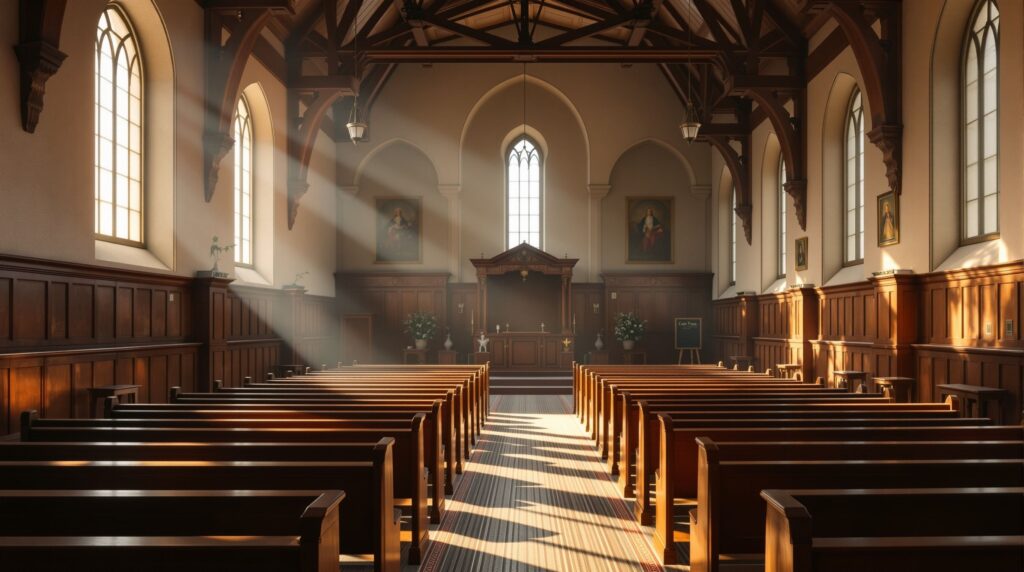
D&C Section 95:16
In June 1833, D&C 95:16 gave the Saints a divine vision for worship within the Kirtland Temple. The Lord declared that the lower inner court be dedicated for sacrament, preaching, fasting, and prayer—the heart of sacred communion. This verse reveals that temple worship is more than ritual; it is the offering of one’s most holy desires before God in reverence and faith.
Doctrine and Covenants 95
Revelation given through Joseph Smith the Prophet, at Kirtland, Ohio, June 1, 1833. This revelation is a continuation of divine directions to build a house for worship and instruction, the house of the Lord (see section 88:119–36).
1–6, The Saints are chastened for their failure to build the house of the Lord; 7–10, The Lord desires to use His house to endow His people with power from on high; 11–17, The house is to be dedicated as a place of worship and for the school of the Apostles.
1 Verily, thus saith the Lord unto you whom I love, and whom I love I also chasten that their sins may be forgiven, for with the chastisement I prepare a way for their deliverance in all things out of temptation, and I have loved you—
2 Wherefore, ye must needs be chastened and stand rebuked before my face;
3 For ye have sinned against me a very grievous sin, in that ye have not considered the great commandment in all things, that I have given unto you concerning the building of mine house;
4 For the preparation wherewith I design to prepare mine apostles to prune my vineyard for the last time, that I may bring to pass my strange act, that I may pour out my Spirit upon all flesh—
5 But behold, verily I say unto you, that there are many who have been ordained among you, whom I have called but few of them are chosen.
6 They who are not chosen have sinned a very grievous sin, in that they are walking in darkness at noon-day.
7 And for this cause I gave unto you a commandment that you should call your solemn assembly, that your fastings and your mourning might come up into the ears of the Lord of Sabaoth, which is by interpretation, the creator of the first day, the beginning and the end.
8 Yea, verily I say unto you, I gave unto you a commandment that you should build a house, in the which house I design to endow those whom I have chosen with power from on high;
9 For this is the promise of the Father unto you; therefore I command you to tarry, even as mine apostles at Jerusalem.
10 Nevertheless, my servants sinned a very grievous sin; and contentions arose in the school of the prophets; which was very grievous unto me, saith your Lord; therefore I sent them forth to be chastened.
11 Verily I say unto you, it is my will that you should build a house. If you keep my commandments you shall have power to build it.
12 If you keep not my commandments, the love of the Father shall not continue with you, therefore you shall walk in darkness.
13 Now here is wisdom, and the mind of the Lord—let the house be built, not after the manner of the world, for I give not unto you that ye shall live after the manner of the world;
14 Therefore, let it be built after the manner which I shall show unto three of you, whom ye shall appoint and ordain unto this power.
15 And the size thereof shall be fifty and five feet in width, and let it be sixty-five feet in length, in the inner court thereof.
16 And let the lower part of the inner court be dedicated unto me for your sacrament offering, and for your preaching, and your fasting, and your praying, and the offering up of your most holy desires unto me, saith your Lord.
17 And let the higher part of the inner court be dedicated unto me for the school of mine apostles, saith Son Ahman; or, in other words, Alphus; or, in other words, Omegus; even Jesus Christ your Lord. Amen.