
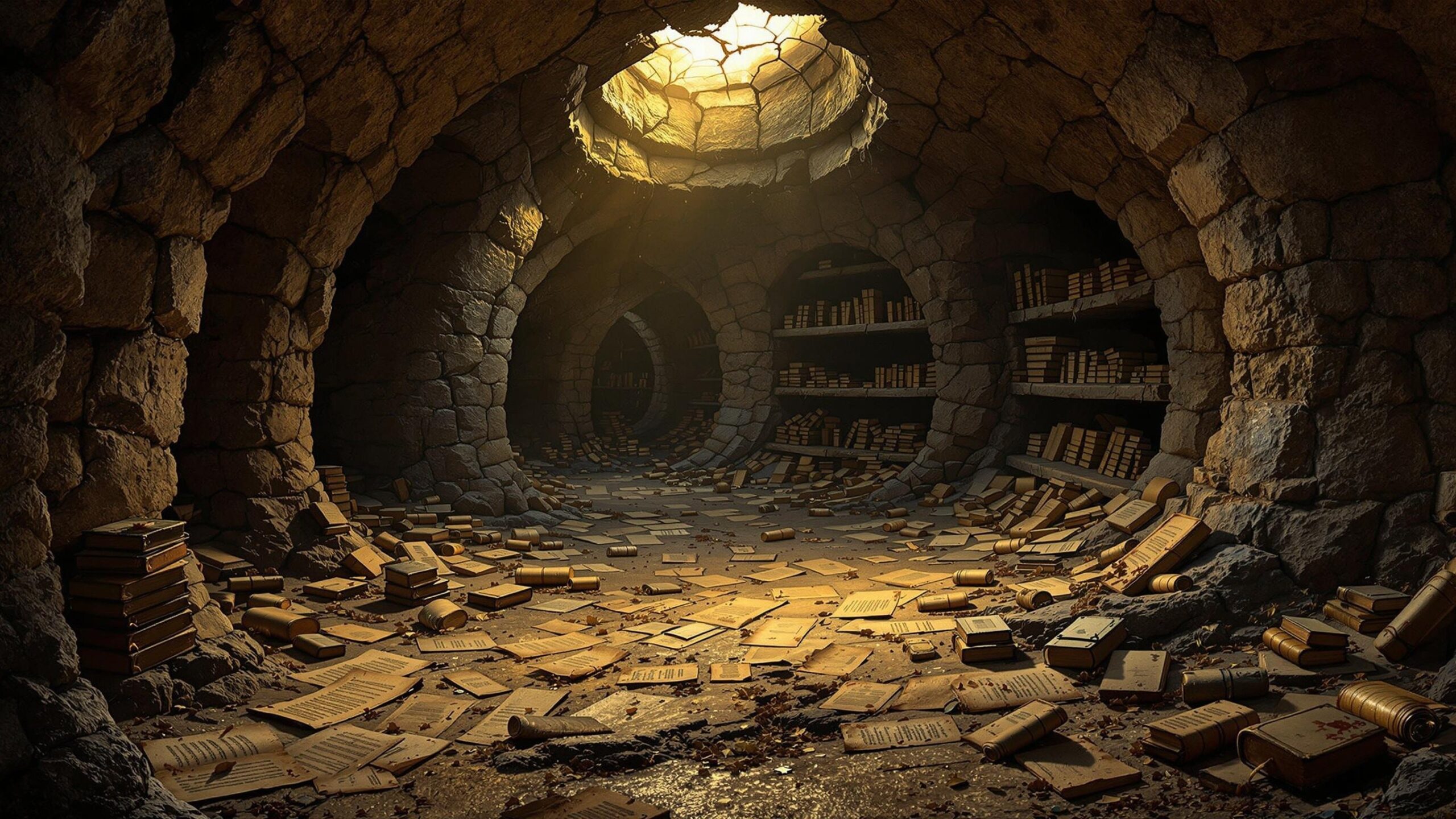
Throughout the history of sacred writ, the scriptures whisper of records we no longer possess—ancient texts, prophetic writings, and heavenly visions that were once part of God’s revealed word but have since been lost, hidden, or withheld. These lost books and missing records ignite the imagination and stir the soul. What did they contain? Why are they gone? And most importantly, what do the scriptures themselves tell us about them? The idea that our current canon is only part of a much broader tapestry of divine communication is not only fascinating—it’s scripturally supported. From both ancient texts and modern revelation, we learn that many writings, scrolls, and records were either removed, never recorded in full, or reserved for a future day. This article explores what we know from scripture about these missing texts, why they matter, and how they fit into the unfolding story of God’s dealings with His children.
The Bible and Its Allusions to Lost Writings
The Bible is a treasure trove of references to texts we no longer have. While the Bible itself is revered as a complete and sacred record, it also openly acknowledges the existence of other books—many of which are not included in the biblical canon. These references are not vague hints but explicit citations to books that were clearly known and recognized in ancient times.
Consider the Book of the Wars of the Lord, mentioned in Numbers 21:14, a title that evokes imagery of epic battles and divine interventions. We read about The Book of Jasher in Joshua 10:13 and again in 2 Samuel 1:18—a record so significant that it’s cited in connection with miraculous events such as the sun standing still. The Book of the Acts of Solomon, the Book of Nathan the Prophet, and the Book of Gad the Seer are mentioned in 1 Kings and 1 Chronicles, clearly showing that the Bible was once part of a much broader prophetic archive.
Even the New Testament references writings beyond its own pages. In Jude 1:14–15, we find a direct quote from the Book of Enoch, a text not found in the Bible but preserved in part by ancient Jewish and Christian communities. Paul, in his epistles, occasionally quotes or refers to sayings and traditions not found anywhere else in scripture, hinting at a larger world of spiritual knowledge circulating among the early Saints.
These references are not accidental; they serve as signposts pointing to a greater body of sacred knowledge. They remind us that what we have today is precious, but not all-encompassing. The Bible is honest about its own incompleteness, and in doing so, invites readers to seek out additional truth.
The Book of Mormon’s Witness of Missing Records
The Book of Mormon is a powerful testimony of Jesus Christ, but it is also a record about records. From its opening pages, the text is deeply concerned with preserving history, tracking genealogy, and safeguarding sacred writings. It introduces us to prophets like Nephi and Mormon who not only wrote scripture but also handled and curated entire libraries of sacred documents. In 1 Nephi 13, the prophet Nephi sees a vision in which parts of the gospel are “taken away” after the Bible goes forth among the Gentiles. This prophecy reveals that many “plain and precious” truths were removed or lost over time. The vision doesn’t just lament the loss but testifies that more records will eventually come forth to restore that which was lost. The Book of Mormon itself is one of these restorations. Throughout the Book of Mormon, we encounter frequent references to other records: the Brass Plates, the Large and Small Plates of Nephi, the 24 plates of Ether, and more. Mosiah 1:3 makes it clear that without these sacred records, the people of Lehi’s descendants would have “suffered in ignorance.” Later, in Mormon 6 and 7, we learn that Mormon and his son Moroni abridged and sealed many records, knowing they were not yet meant to be revealed. Most tantalizing of all is the mention of the sealed portion of the gold plates, which Joseph Smith did not translate. According to Ether 4, these writings contain the “revelation of all things from the foundation of the world unto the end thereof,” a staggering claim. However, the Lord withholds them until people demonstrate greater faith. This missing portion is not merely a historical curiosity—it is a future scripture, awaiting a spiritually prepared generation.
The Doctrine and Covenants and Ongoing Revelation
Modern revelation in the Doctrine and Covenants further affirms the existence of unrevealed scripture. In Section 107, we learn that the prophet Enoch had a book of his own, containing the “order of the priesthood” and revelations too sacred for casual reading. The Prophet Joseph Smith also spoke of the writings of Adam, of which only fragments have survived in modern scripture. Section 93 references the record of John—a writing not found in the Gospel of John but evidently containing deeply spiritual insights about the premortal Christ. Joseph Smith was told that this record came by the “testimony of John” and would be part of the greater light to be revealed.
Doctrine and Covenants Section 91 directly addresses the Apocrypha, a collection of ancient writings that was included in early editions of the King James Bible but later removed. The Lord told Joseph Smith that the Apocrypha contains many things that are true, but also many interpolations by men. Therefore, it is to be read “by the Spirit,” and not regarded as part of the Standard Works. This counsel demonstrates that while the scriptural canon is curated, it is not closed to further insight.
Perhaps one of the most poignant moments in modern scripture comes from Doctrine and Covenants 121 and 122, where the Prophet Joseph Smith, in Liberty Jail, receives insight and comfort from the Lord during a time of suffering. These sections are not part of a “lost book,” but they emerged from a moment that might have been forgotten—had it not been for the practice of recording divine communication. The Doctrine and Covenants teaches us that God still speaks, and by extension, that there may yet be records, journals, scrolls, and visions waiting in reserve, held back by divine timing.
Pearl of Great Price and Restored Fragments
The Pearl of Great Price includes some of the most unique restored scripture in modern times. The Book of Moses presents an expanded version of Genesis, restoring lost details about the Creation, the Fall, and the ministry of Enoch. In Moses 1, the Lord explicitly tells Moses that many things have been withheld from humanity and that what he is receiving is only a part of a larger, eternal record. The Book of Abraham, translated from ancient Egyptian papyri, introduces new doctrines and cosmological insights, including the concept of the pre-mortal council and the eternal nature of intelligences. These teachings had been lost to history until they were restored through revelation.
In Joseph Smith—Matthew, we are given a clarified version of Matthew 24, which had been previously obscured in translation. In Joseph Smith—History, we are told the story of how the Restoration itself began through heavenly visitations. These are not merely spiritual commentaries—they are fragments of a grander scriptural corpus that God is restoring piece by piece. Taken together, the Pearl of Great Price serves as a model for how missing scripture can return through the hands of prophets. It encourages us to imagine a larger library of divine knowledge—some already revealed, some yet to come.
Why Records Were Lost—And Why They Might Return
The loss of scripture is not always a matter of tragedy or negligence. Sometimes, records are withheld for sacred reasons. The Book of Mormon teaches that sacred things should not be shown to the unworthy (Alma 12:9), and Jesus Himself told His disciples that He had “many things to say” to them, but they were not yet ready to bear them (John 16:12). Revelation is often dependent on spiritual readiness. Other losses, however, are due to human weakness—wars, apostasy, cultural shifts, and careless transmission. The destruction of the Library of Alexandria, the suppression of texts deemed heretical, and the political manipulation of scripture have all played roles in shaping what survived and what did not.
But the Lord has promised that nothing is permanently lost to Him. In 2 Nephi 27 and Doctrine and Covenants 42, we are told that God will “bring forth” His word in the last days. The return of lost scripture is part of the Restoration’s destiny. Indeed, one of the core tenets of the Restoration is the reconstitution of knowledge—both sacred and secular. Lost books are not just missing words; they are missing perspectives, missing prophecies, and missing power. Their return will not only satisfy curiosity but also fulfill prophecy.
Modern Echoes: Apocrypha, Pseudepigrapha, and Discovered Scrolls
Outside of canonized scripture, other writings have resurfaced in modern times, prompting new discussions about what might once have been part of sacred literature. The Dead Sea Scrolls, discovered in the mid-20th century, preserved fragments of ancient biblical books and previously unknown texts like the War Scroll and Thanksgiving Hymns. These writings show how diverse and rich ancient scripture traditions were. The Apocrypha and Pseudepigrapha—books like Tobit, 1 Enoch, Jubilees, and the Ascension of Isaiah—offer theological ideas that sometimes align with LDS teachings, such as the pre-mortal existence, angels, and divine councils. Though not canonized, these works offer glimpses into a spiritual world that biblical editors may have left out. Latter-day Saints are uniquely positioned to appreciate these discoveries. The Restoration teaches that truth can come from many sources, and that God will yet reveal “many great and important things” pertaining to His kingdom. The scriptural canon is not a wall—it is a door to more.
Faith in a Future Full of Revelation
For those who cherish the word of God, the idea of lost scripture is not a cause for fear—it’s a promise of more. The Standard Works themselves testify that what we have is sufficient for salvation, but also hint at glorious expansions to come. The sealed portion of the Book of Mormon, the writings of Enoch and Adam, the full record of John, and countless other sacred records await a people prepared to receive them. The Restoration is not a one-time event—it is ongoing. The scriptures we have are both foundation and invitation. They call us to study diligently, live righteously, and seek revelation ourselves. In doing so, we align with the very prophets who recorded, preserved, and mourned the loss of sacred writings long ago.
A Living Legacy of Truth Yet to Be Revealed
The scriptures speak not only of what God has said, but also of what He will say. The lost books and missing records mentioned in holy writ are not ghost stories—they are spiritual treasures waiting to be uncovered. From the Bible’s subtle allusions to the Book of Mormon’s prophecies, from the Doctrine and Covenants’ affirmations to the Pearl of Great Price’s restorations, we are surrounded by a rich, layered legacy of divine truth. We do not worship a silent God. He continues to speak through prophets, through inspiration, and eventually—through books long hidden from human eyes. As we await the unfolding of future scripture, our task is to cherish and live by the word we have now, trusting that in God’s perfect timing, all things shall be revealed.