
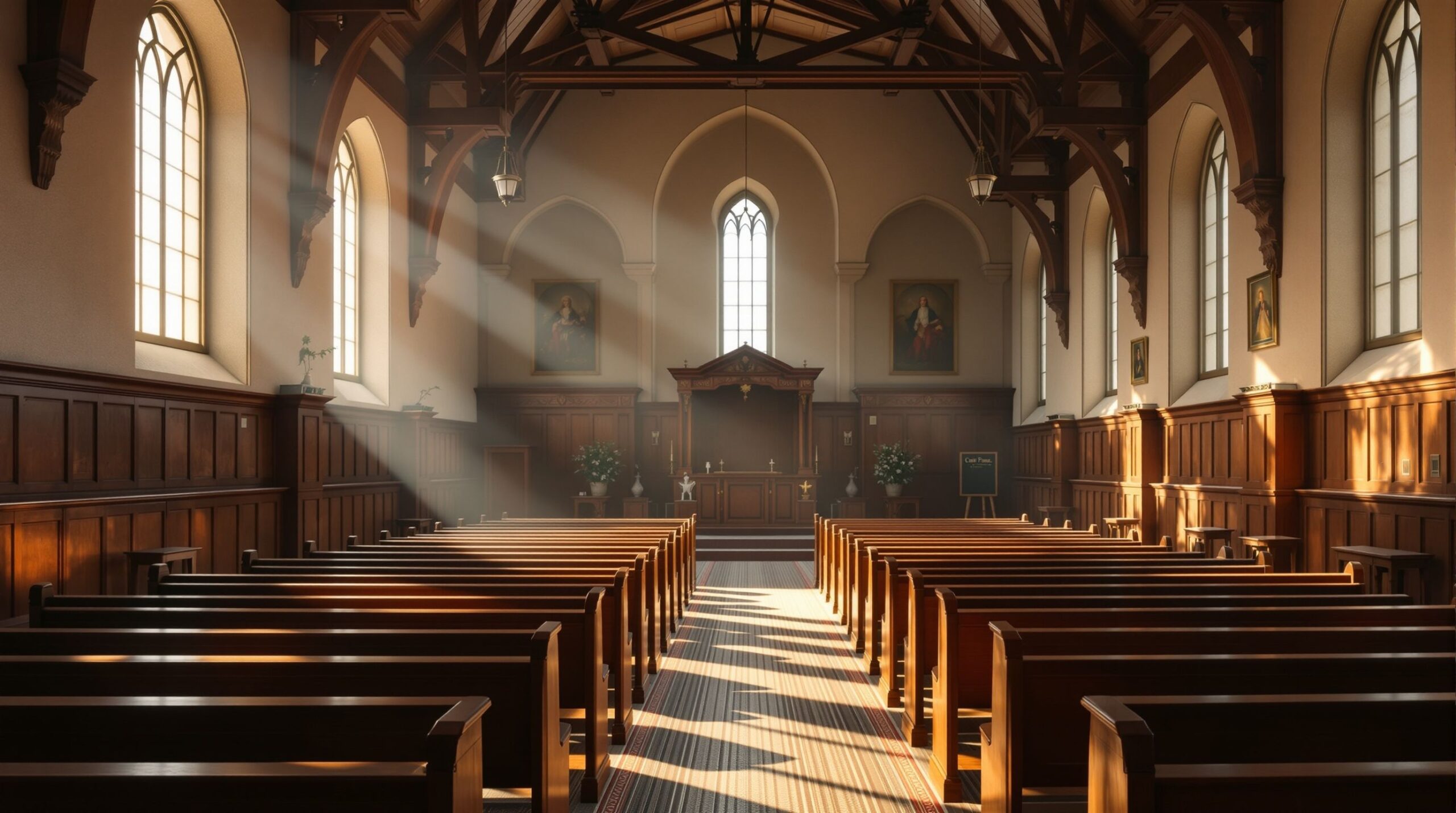
D&C 95:16 “And let the lower part of the inner court be dedicated unto me for your sacrament offering, and for your preaching, and your fasting, and your praying, and the offering up of your most holy desires unto me, saith your Lord.”
Study Insights
D&C 95:16 (June 1833)
A Sacred Blueprint for Worship
Doctrine and Covenants 95:16, received in June 1833 in Kirtland, Ohio, gives one of the most beautiful and detailed glimpses into how the Lord envisions His house—a place where heaven and earth meet through sacred worship. In this verse, the Lord commands that “the lower part of the inner court be dedicated unto me for your sacrament offering, and for your preaching, and your fasting, and your praying, and the offering up of your most holy desires unto me.” Within these few lines, the Lord outlines the purpose of His temple: a holy space for communion, consecration, and covenant.
This revelation came as the Saints were preparing to build the Kirtland Temple, the first temple of the Restoration. While earlier verses in D&C 95 rebuked the Saints for delaying the construction, verse 16 shifts to revelation filled with divine vision. It moves from chastening to creation—revealing that the temple was to be a living symbol of devotion. The “inner court” represents the sacred heart of worship, a place where the Saints would gather not merely to meet but to commune with God.
The Heart of Holy Worship
Each phrase in D&C 95:16 reveals a key aspect of divine worship. The Lord first designates the temple for the sacrament offering, showing that remembrance of the Savior’s atonement would be central. This connects the temple’s purpose directly to Jesus Christ, making it a place to renew covenants and reflect on His redeeming power.
The next purposes—“preaching,” “fasting,” and “praying”—show the holistic nature of temple worship. It is not only about ritual but about learning, refining, and surrendering. Preaching brings understanding, fasting brings humility, and prayer brings communion. Together, they form the rhythm of spiritual life that the Lord intended for His people.
Then comes the most profound phrase: “the offering up of your most holy desires unto me.” This line transcends formality—it’s deeply personal. The Lord invites His Saints to bring their hearts, hopes, and struggles before Him. In this sense, the temple is not only a sanctuary of ordinance but a sanctuary of emotion. It becomes the one place where human desire meets divine will, and where faith is transformed into consecration.
The Temple as a Living Symbol
This instruction also reveals the temple’s architectural and spiritual symmetry. The “lower part of the inner court” was to be a gathering place for the Saints’ collective worship. It symbolized the foundation of faith—the communal strength of the Saints united in purpose. Later, the upper rooms of the Kirtland Temple would serve as spaces for instruction and revelation, showing how the Lord designed His house to lead His people from worship to wisdom, from gathering to glory.
For the Saints in 1833, this verse was more than design instruction—it was a promise. The Lord was teaching them that if they built a house for Him, He would fill it with His Spirit. And when the Kirtland Temple was finally completed, the Saints experienced the literal fulfillment of that promise—heavenly visitations, divine outpourings, and revelation that forever changed the course of the Church.
A Pattern for the Soul
D&C 95:16 continues to speak to modern disciples. The temple, in every dispensation, is the place where we offer up our “most holy desires.” It is a reminder that God values sincerity over perfection and devotion over appearance. The verse teaches that true worship is not limited to ritual actions—it is the act of bringing our entire souls before the Lord. In every age, the Lord invites His followers to dedicate a sacred inner space—both in temples and within their hearts—for prayer, sacrifice, and communion. D&C 95:16 captures the essence of temple worship: to gather in holiness, to offer in humility, and to draw near in love to the One who consecrates all things.