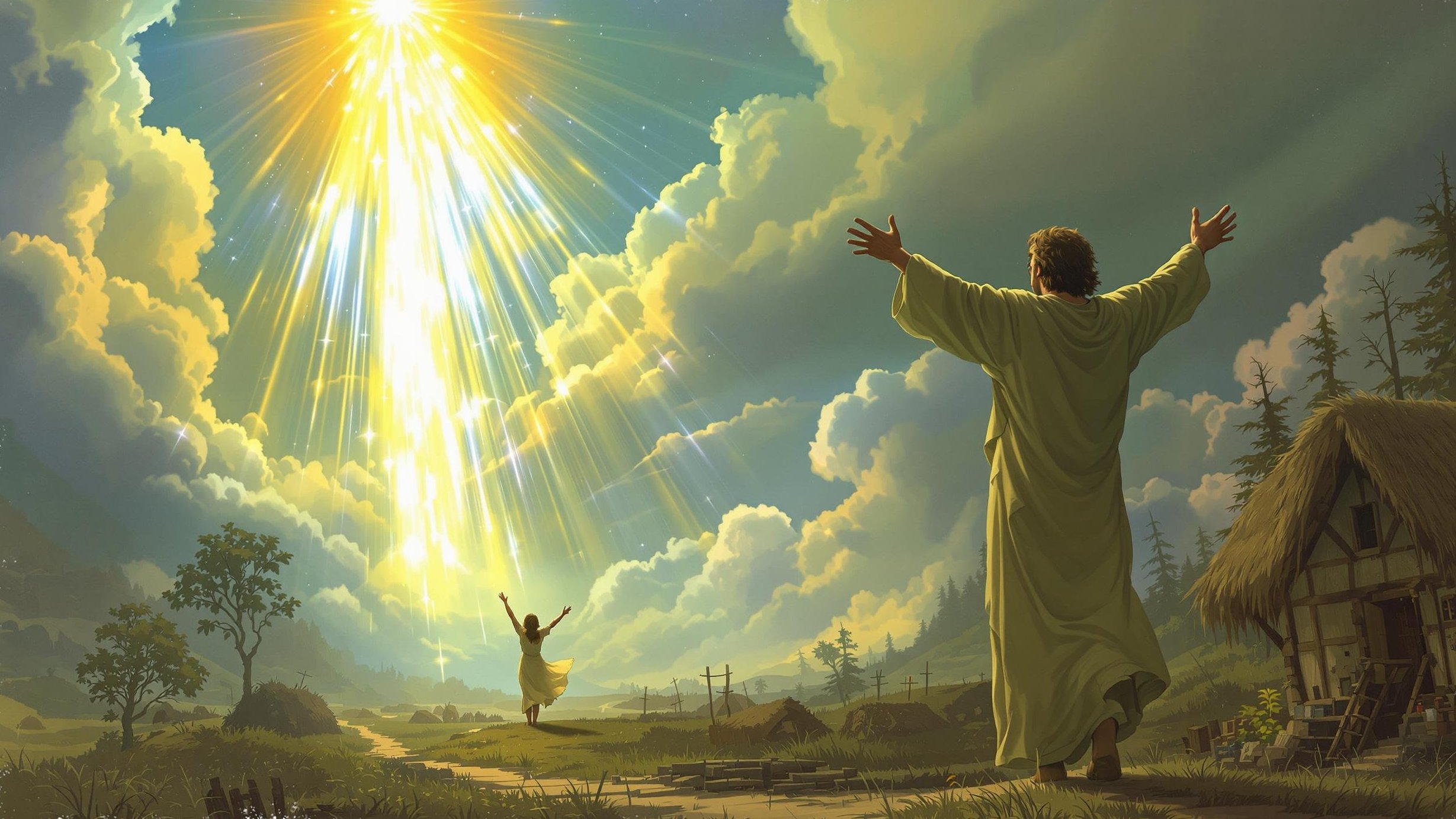

D&C 86:1-3 “Verily, thus saith the Lord unto you my servants, concerning the parable of the wheat and of the tares: Behold, verily I say, the field was the world, and the apostles were the sowers of the seed; And after they have fallen asleep the great persecutor of the church, the apostate, the whore, even Babylon, that maketh all nations to drink of her cup, in whose hearts the enemy, even Satan, sitteth to reign—behold he soweth the tares; wherefore, the tares choke the wheat and drive the church into the wilderness.
“
Study Insights
D&C 86:1–3 – The Wheat and the Tares Reimagined in Latter-day Revelation (December 1832)
In December of 1832, amid growing revelations that shaped the early foundation of the Church of Jesus Christ of Latter-day Saints, the Lord gave Joseph Smith a powerful interpretation of one of Christ’s most well-known parables—the wheat and the tares. This explanation, found in Doctrine and Covenants 86:1–3, pierces through centuries of symbolic ambiguity and unveils a prophetic timeline of apostasy, persecution, and eventual restoration.
Unlocking the Parable’s Deeper Meaning
Jesus Christ’s original parable of the wheat and the tares, as told in the New Testament, paints a picture of good and evil growing together until the final judgment. But in D&C 86, the Lord lifts the veil further, applying the parable directly to the world’s spiritual history. “The field was the world,” He declares, and “the apostles were the sowers of the seed.” The apostles, charged with spreading Christ’s gospel, sowed the pure wheat of truth across the world. Yet, this spiritual harvest did not go unchallenged.
The Apostasy Foretold and Personified
After the apostles “fell asleep”—a reference to their martyrdom and passing—the scene darkens. In their absence, the enemy began to act. This “enemy” is clearly named: Satan. He sowed “tares,” or false doctrines and spiritual corruption, infiltrating what had once been the Lord’s thriving field of truth. These tares represent not only doctrinal distortions but systemic persecution, as described in vivid and prophetic language. The “great persecutor of the church,” the “apostate,” and “Babylon”—these symbols all combine into a terrifying force that drives the true church “into the wilderness.” This powerful imagery evokes the centuries of spiritual darkness and apostasy that followed the original apostolic age.
Babylon’s Cup and the Hearts of Men
The Lord further characterizes Babylon as the “whore” who “maketh all nations to drink of her cup.” This is no ordinary figurative language; it’s an indictment of worldly institutions and ideologies that have led humanity away from Christ’s teachings. The spiritual toxins of pride, corruption, and idolatry are described as being so potent that Satan himself finds a throne in the hearts of many. He reigns there, not just as a deceiver, but as an accepted ruler—an insight that reflects the depth of the apostasy and the necessity of divine restoration.
A Prophetic Prelude to the Restoration
These three verses form a sobering yet energizing prelude to the great restoration of the gospel in the latter days. They affirm that the apostasy was not a mere accident of history—it was foreseen, allowed, and eventually to be overcome by a mighty return of priesthood authority and doctrinal clarity. The wheat, though choked and hidden for a time, was never lost. It would rise again. In just three verses, D&C 86:1–3 draws a sweeping arc from the apostolic age to the latter-day dispensation, reminding modern readers that truth can be overshadowed but never extinguished. Through this revelation, the Lord invites us to see the grand continuity of His work—and to stand as wheat in a world still tangled with tares.